On this page
Key points
- Your body starts to recover within hours of your last cigarette.
- If you can stay smoke-free for 28 days, the NHS says you are 5 times more likely to quit for good.
- Free local Stop Smoking Services make you 3 times more likely to succeed.
- Nicotine replacement, prescription medicines and vaping can all help with cravings.
What happened when Steve decided to quit?
Steve, one of our colleagues, started smoking when he was around 18. "I first started when I was around 18, so around 26 years ago now," he says.
What changed his mind was his health. "In April 2024, I developed a chest infection that turned into a nasty episode of bronchitis." A walk that usually took him 10 minutes took nearly 30, his oxygen levels dropped, and he needed an inhaler. Afterwards, he kept picking up chest infections. He decided it was time to stop.
How did Steve manage the cravings?
Rather than stopping overnight, Steve switched to vaping first. "I moved onto a vape initially, and I am now reducing that successfully as well."
The cravings were hard, especially at the start and when he was around other people who smoked. "It was like having an itch on your foot and not being able to scratch it." But they eased over time. "I can go 8 or 9 hours during the day without using the vape if I need to, without it really causing an issue."
What difference has it made?
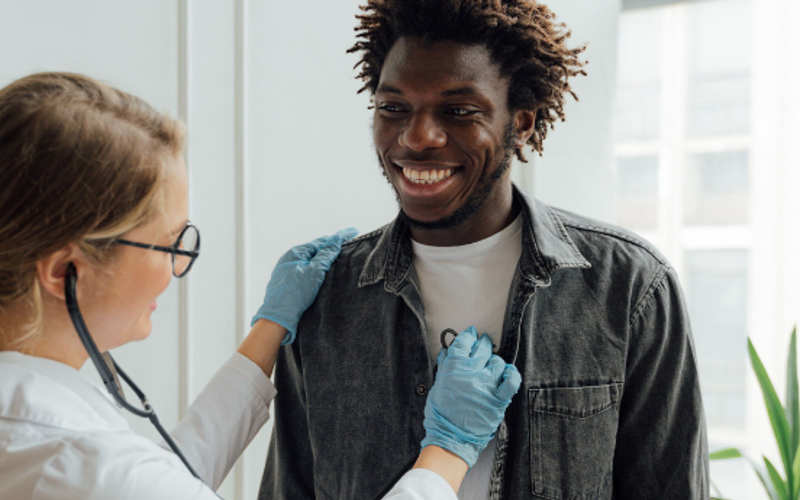
When we spoke to Steve, he had been smoke-free for seven weeks and was already noticing the difference. His doctor confirmed his oxygen levels had recovered, and a peak flow test showed his breathing had improved by around half. When a fire alarm at work meant using the stairs, he walked up to the fourth floor without getting out of breath.
There was a financial benefit too. "I have more money than I did. Smoking is expensive, and the vape is costing me £30 a month, which is nearly 75% less than before."
His advice to anyone thinking about quitting is simple. "Find your reason and invest in it! Trying to quit because someone told you that you should is so much harder than deciding you actually want to for your own reasons. Stick with it, it is worth it."
What happens to your body when you stop smoking?
Your body starts to recover quickly. According to the NHS, within 20 minutes your pulse starts to return to normal. After 48 hours, carbon monoxide levels in your blood have dropped to those of a non-smoker. After a year, your risk of a heart attack is half that of a smoker, and after 10 years your risk of dying from lung cancer has halved.
The NHS also says that if you can stay smoke-free for 28 days, you are 5 times more likely to quit for good. That is why the national Stoptober campaign each October focuses on getting through the first 28 days.
What support can help you quit?
You do not have to rely on willpower alone. The right support makes a real difference.
Your local Stop Smoking Service is free and offers expert advice and support. The NHS says that with professional help, you are 3 times more likely to quit for good. The service can also give you access to stop smoking treatments. The free NHS Quit Smoking app can help you track your progress too.
Nicotine replacement therapy gives you nicotine without the harmful chemicals in tobacco smoke, which helps with cravings. It comes as patches, gum, lozenges, mouth and nasal sprays and inhalators. You can buy it from pharmacies and supermarkets, or get it from a GP or your local Stop Smoking Service.
There are also nicotine-free medicines, including varenicline, cytisine and bupropion, which reduce cravings and withdrawal symptoms. You may be able to get these from your local Stop Smoking Service or GP.
Can vaping help you stop smoking?
For many people, like Steve, it can. The NHS says you are roughly twice as likely to quit smoking if you use a nicotine vape compared with other nicotine replacement products. Vaping is not completely risk-free, but it carries a small fraction of the risk of smoking cigarettes. It is a tool to help smokers stop, and it is not recommended for people who do not smoke. Children and young people should not vape.
How can you give yourself the best chance?
Set a quit date and tell people around you, so they can support you. Think about the times you usually smoke, such as with a coffee, after a meal or when you are stressed, and plan what you will do instead. Being active can help take your mind off cravings and ease stress.
If you slip up, do not give up. Many people need more than one attempt before they quit for good, and every attempt teaches you something about what works for you.
Common questions
How long do nicotine cravings last?
Cravings are usually strongest in the first few weeks and ease over time. The NHS says that if you can stay smoke-free for 28 days, you are 5 times more likely to quit for good. Nicotine replacement and medicines can help in the meantime.
Is vaping safer than smoking?
Vaping is not completely risk-free, but the NHS says it carries a small fraction of the risk of smoking cigarettes. It can help smokers quit, but it is not recommended for people who do not smoke.
Where can I get free help to stop smoking?
Your local Stop Smoking Service is free and offers expert support and access to treatments. The NHS says you are 3 times more likely to quit for good with professional help. You can find your local service on the NHS website.
Sources
- Quit smoking. NHS Better Health.
- Find your local Stop Smoking Service. NHS Better Health.
- Quit smoking with nicotine replacement therapies. NHS Better Health.
- Quit smoking with nicotine-free medicines. NHS Better Health.
- Vaping to quit smoking. NHS Better Health.
- Using e-cigarettes to stop smoking. NHS.